Top Computer Hardware Trends Shaping the Future
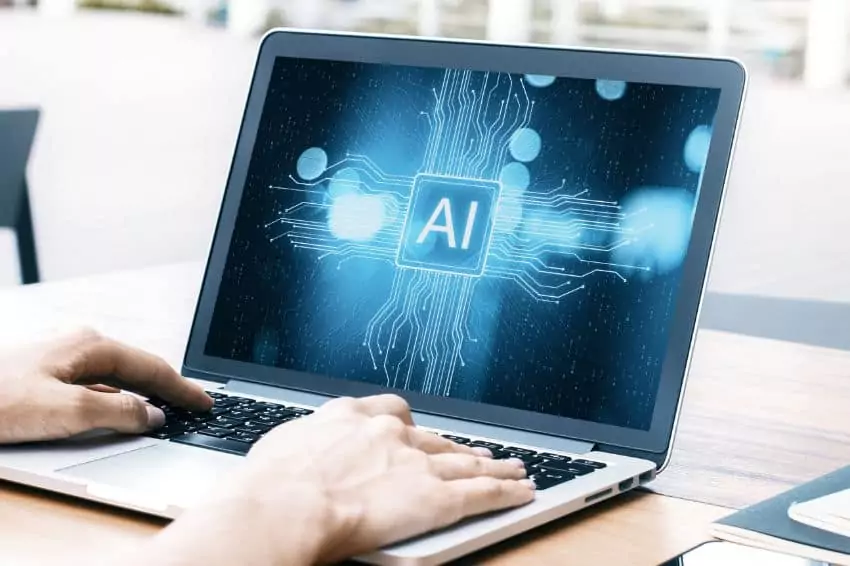
Computer hardware is entering a period of rapid transformation. As artificial intelligence, cloud computing, immersive technologies, and sustainability goals reshape the digital landscape, hardware innovation is evolving just as quickly. The future of computing will not be defined by faster processors alone, but by smarter architectures, specialized accelerators, energy-efficient designs, and tightly integrated ecosystems.
This article explores the most important computer hardware trends shaping the next generation of technology and how they are influencing businesses, developers, and everyday users.
Overview of Emerging Hardware Trends
Hardware development is shifting toward performance efficiency, specialization, and intelligent processing. Instead of relying only on general-purpose computing, manufacturers are building purpose-built components designed for specific workloads such as machine learning, gaming, analytics, and real-time processing.
The following trends are redefining how computing systems are designed and deployed.
AI-Optimized Processors and Accelerators
Artificial intelligence is one of the strongest forces shaping hardware innovation today. Traditional CPUs cannot efficiently handle the parallel workloads required by modern AI models, which is why specialized accelerators are becoming essential.
Key advancements include:
- Neural processing units designed for edge devices
- Tensor accelerators optimized for deep learning
- Dedicated AI inference chips for real-time applications
- Hybrid CPU-GPU-AI architectures
These processors enable faster image recognition, speech processing, predictive analytics, and automation while consuming less power than traditional computing methods.
AI acceleration is now integrated into laptops, smartphones, data centers, and even smart appliances, signaling a shift toward intelligent hardware everywhere.
The Rise of Edge Computing Hardware
Edge computing moves processing closer to where data is generated instead of relying entirely on centralized cloud infrastructure. This shift reduces latency and improves responsiveness in applications such as robotics, smart cities, industrial automation, and autonomous vehicles.
Hardware supporting edge computing includes:
- Compact AI inference chips
- Low-power microservers
- Embedded processing boards
- Industrial edge gateways
These devices allow real-time decision-making without constant cloud connectivity, which improves performance and enhances privacy protection.
As connected devices multiply, edge computing hardware will become a foundational layer of modern infrastructure.
Next-Generation GPUs Driving Parallel Computing
Graphics processing units are no longer limited to rendering visuals. They now power scientific simulations, AI training, blockchain processing, and high-performance computing environments.
Modern GPU trends include:
- Increased parallel processing cores
- Improved ray tracing capabilities
- Enhanced AI acceleration features
- Support for advanced visualization workloads
GPUs are essential in fields such as medical imaging, climate modeling, financial forecasting, and virtual production environments. Their ability to handle massive workloads simultaneously makes them critical for future computing platforms.
Quantum Computing Hardware Progress
Quantum computing represents one of the most revolutionary developments in hardware research. While still emerging, quantum systems promise exponential improvements in solving complex problems that classical computers cannot efficiently address.
Current progress includes:
- Improved qubit stability
- Enhanced error correction mechanisms
- Scalable quantum processor prototypes
- Hybrid quantum-classical computing environments
Although widespread adoption may still take time, quantum hardware research is accelerating breakthroughs in cryptography, pharmaceuticals, materials science, and optimization modeling.
Organizations investing early in quantum infrastructure will likely gain long-term advantages.
Advanced Semiconductor Manufacturing Techniques
The semiconductor industry continues to push physical boundaries with smaller transistor sizes and new fabrication methods. Innovations at the chip level directly impact performance, energy consumption, and system reliability.
Major developments include:
- Sub-5 nanometer fabrication nodes
- Chiplet-based processor architectures
- 3D chip stacking technology
- Advanced packaging techniques
Chiplet architecture is particularly important because it allows manufacturers to combine multiple specialized components within a single processor. This approach improves flexibility and reduces manufacturing complexity.
These manufacturing innovations are making computers faster, smaller, and more energy efficient.
Expansion of ARM-Based Computing Platforms
ARM architecture is becoming increasingly popular beyond mobile devices. Its power efficiency and scalability make it ideal for modern computing environments ranging from laptops to cloud servers.
Advantages of ARM-based hardware include:
- Reduced power consumption
- Improved thermal performance
- Extended battery life in portable devices
- Strong performance per watt ratios
Many organizations are transitioning workloads to ARM platforms because they support sustainable computing strategies while maintaining competitive performance levels.
The shift toward ARM processors signals a broader transition away from traditional hardware design assumptions.
High-Speed Memory Innovations
Memory technology plays a critical role in overall system performance. As workloads become more demanding, faster and more efficient memory solutions are becoming essential.
Key memory advancements include:
- DDR5 memory adoption
- High bandwidth memory integration
- Persistent memory technologies
- On-chip cache improvements
These innovations reduce bottlenecks between processors and storage systems, enabling faster application performance and smoother multitasking experiences.
Memory architecture improvements are especially important for AI training environments and real-time analytics systems.
Storage Hardware Evolution Beyond Traditional SSDs
Storage hardware is evolving to support the massive growth of data generated by modern applications. High-speed interfaces and intelligent storage controllers are transforming how information is accessed and managed.
Emerging storage trends include:
- NVMe over fabrics infrastructure
- Computational storage devices
- Storage-class memory technologies
- High-density enterprise storage platforms
Computational storage allows processing tasks to be performed directly within storage devices, reducing the need to transfer large datasets between components. This improves performance while lowering system overhead.
As data volumes continue increasing, storage hardware innovation will remain essential for scalable infrastructure.
Sustainable and Energy-Efficient Hardware Design
Energy consumption has become a major concern across the computing industry. Manufacturers are developing hardware solutions that reduce environmental impact while maintaining performance.
Sustainability-focused hardware strategies include:
- Low-power processor architectures
- Liquid cooling systems for data centers
- Recyclable component materials
- Energy-aware workload scheduling technologies
Green computing initiatives are influencing everything from chip design to server deployment strategies.
Organizations that adopt sustainable hardware solutions benefit from reduced operational costs and improved regulatory compliance.
Specialized Hardware for Immersive Technologies
Virtual reality, augmented reality, and mixed reality applications require powerful hardware capable of handling complex visual rendering and spatial processing tasks.
Important developments include:
- Lightweight wearable processors
- Dedicated spatial computing chips
- Real-time motion tracking sensors
- High refresh-rate display controllers
These technologies are transforming industries such as education, healthcare training, engineering visualization, and entertainment production.
As immersive experiences become more mainstream, specialized hardware will play a central role in delivering seamless interaction environments.
The Growth of Composable Infrastructure
Composable infrastructure allows organizations to dynamically allocate computing resources such as processors, storage, and memory based on workload requirements.
Hardware enabling this trend includes:
- Software-defined storage systems
- Modular server architectures
- High-speed interconnect fabrics
- Disaggregated computing platforms
Instead of purchasing fixed server configurations, businesses can assemble infrastructure components on demand. This approach improves flexibility and reduces resource waste.
Composable hardware environments are becoming especially valuable in cloud-native computing ecosystems.
Security-Focused Hardware Enhancements
Cybersecurity threats continue evolving, which makes hardware-level protection increasingly important. Security features built directly into processors and chipsets provide stronger defense than software-only approaches.
Recent innovations include:
- Hardware root-of-trust systems
- Secure enclave processing regions
- Trusted execution environments
- Integrated encryption accelerators
These protections help safeguard sensitive data during processing, storage, and transmission.
Hardware-based security will remain essential as organizations manage growing volumes of confidential information across distributed environments.
The Emergence of Photonic Computing Components
Photonic computing uses light instead of electricity to transmit information inside processors and interconnect systems. This technology has the potential to dramatically improve bandwidth and reduce energy consumption.
Current research directions include:
- Optical data transmission links
- Photonic accelerator prototypes
- Light-based neural processing systems
- Optical memory integration experiments
Although still developing, photonic hardware could transform high-performance computing and data center architecture in the coming years.
Integration of Heterogeneous Computing Architectures
Modern computing workloads rarely rely on a single processor type. Instead, heterogeneous architectures combine multiple specialized components to optimize performance across tasks.
Typical combinations include:
- CPUs for general workloads
- GPUs for parallel processing
- NPUs for AI inference
- FPGAs for customizable acceleration
This layered hardware strategy improves efficiency and enables systems to adapt dynamically to changing processing requirements.
Future computing platforms will increasingly rely on heterogeneous integration as workloads become more complex.
Frequently Asked Questions
1. What industries benefit the most from emerging computer hardware trends
Industries such as healthcare, finance, artificial intelligence research, manufacturing automation, gaming, and cloud computing benefit significantly because they rely heavily on high-performance processing and real-time data analysis.
2. Why is edge computing hardware becoming more important than traditional centralized computing
Edge hardware reduces latency, improves privacy, enables real-time processing, and supports environments where continuous internet connectivity is not reliable or available.
3. How does chiplet architecture improve processor performance
Chiplet architecture allows manufacturers to combine specialized components within a single processor package, improving scalability, reducing production costs, and increasing flexibility in hardware design.
4. What role does hardware play in supporting artificial intelligence applications
Specialized accelerators such as GPUs and neural processors enable faster training and inference, making AI systems more efficient and accessible across devices and platforms.
5. Are ARM processors replacing traditional processor architectures
ARM processors are expanding rapidly due to their efficiency advantages, but they are complementing rather than completely replacing traditional architectures in most environments.
6. How will photonic computing impact future data centers
Photonic computing could significantly reduce power consumption and increase bandwidth, enabling faster communication between components inside high-performance computing systems.
7. What makes composable infrastructure different from traditional server architecture
Composable infrastructure allows computing resources to be dynamically assembled based on workload needs, improving flexibility, scalability, and overall resource utilization.